
Choosing the right construction material is one of the most important decisions in any building project. Bricks play a major role in determining the strength, durability, thermal insulation, and overall quality of a structure. Among the most commonly used construction materials today are traditional red bricks and modern fly ash bricks. Both types of bricks are widely used in residential, commercial, and industrial construction projects, but many customers often get confused about which option is better for their specific requirements.
Understanding the differences between red bricks and fly ash bricks helps builders, contractors, and property owners make the right decision based on project type, budget, durability, and long-term performance.
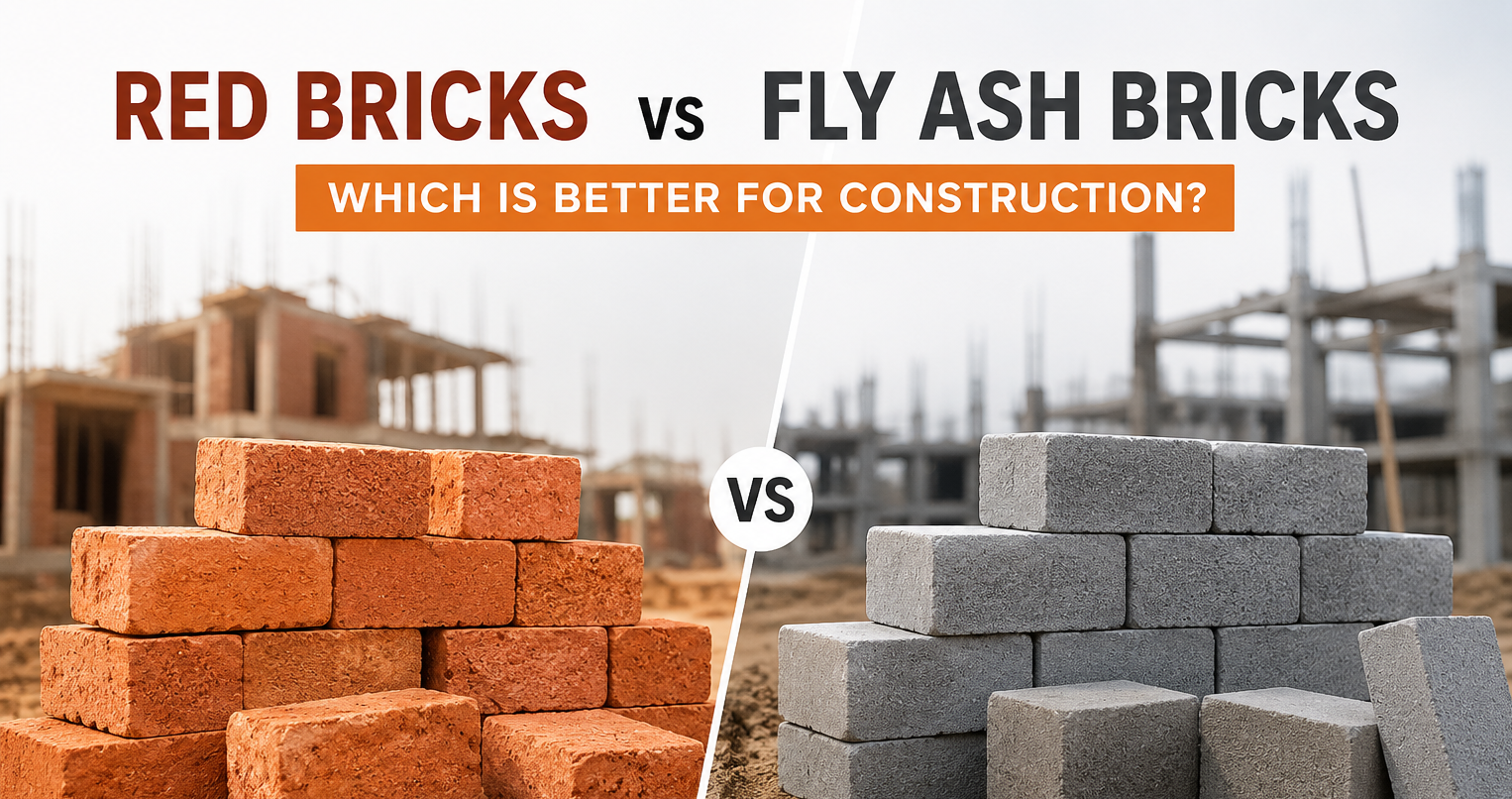
Red bricks are traditional construction materials manufactured using natural clay and fired at high temperatures in kilns. They have been used for generations because of their strength, reliability, and long-lasting performance. Red bricks are known for their excellent durability and are commonly used in houses, apartments, compound walls, warehouses, and commercial buildings. Their natural appearance and strong load-bearing capacity make them one of the most preferred building materials in the construction industry.
Fly ash bricks, on the other hand, are manufactured using fly ash, cement, sand, and water. Fly ash is a by-product obtained from thermal power plants. These bricks are produced using modern manufacturing processes and are becoming increasingly popular because of their smooth finish, lightweight structure, and environmentally friendly nature.
One of the biggest advantages of red bricks is their excellent strength and durability. Properly manufactured red bricks provide strong structural support and can withstand harsh weather conditions for many years. They are highly suitable for load-bearing walls and long-lasting construction projects. Red bricks also offer good thermal insulation, helping maintain indoor temperatures and improving comfort inside buildings.
Fly ash bricks are known for their uniform shape and smooth finishing. Because they are machine-made, they usually have consistent dimensions and require less mortar during construction. Their lightweight nature helps reduce the overall load on the building structure. Fly ash bricks also absorb less water compared to some low-grade clay bricks, which can help reduce dampness issues.
In terms of appearance, red bricks provide a traditional and natural look that many homeowners and builders prefer. Their classic reddish color gives buildings a strong and timeless appearance. Fly ash bricks usually have a grey cement-like appearance, which may not provide the same traditional aesthetic feel as red bricks.
Another important factor to consider is durability. High-quality red bricks are extremely durable and can last for decades with minimal maintenance. They have been trusted in construction for centuries because of their reliable long-term performance. Fly ash bricks also offer good durability when manufactured properly, but their quality can vary depending on raw materials and production standards.
Water absorption is another major difference between the two. Premium red bricks manufactured under proper conditions usually maintain good water resistance. However, low-grade clay bricks may absorb excess water. Fly ash bricks generally absorb less water because of their dense composition, which helps reduce moisture penetration and wall seepage issues.
When it comes to environmental impact, fly ash bricks are often considered eco-friendly because they utilize industrial waste materials from thermal power plants. This reduces environmental pollution and supports recycling. Red bricks, however, are made from natural clay, and excessive clay extraction can affect the environment if not managed responsibly.
Construction cost also plays an important role in material selection. The cost difference between red bricks and fly ash bricks varies depending on location, transportation, quality, and market demand. In many cases, fly ash bricks can help reduce plastering costs because of their smooth surface and uniform size. However, premium red bricks continue to remain a preferred choice for builders who prioritize traditional strength, durability, and proven long-term performance.
For residential construction, both red bricks and fly ash bricks can be suitable depending on project requirements. Red bricks are often preferred for independent houses, villas, and traditional construction because of their strong structural stability and classic appearance. Fly ash bricks are commonly used in modern apartment projects and commercial buildings where lightweight materials and smooth finishing are important.
The quality of the bricks matters more than simply choosing between red bricks and fly ash bricks. Poor-quality materials can lead to structural problems, cracks, dampness, and increased maintenance costs. That is why it is extremely important to purchase construction materials from trusted and reliable suppliers who maintain proper quality standards.
SLG Brick Supply provides premium-quality red bricks and construction materials for residential, commercial, and industrial projects across Hyderabad. We focus on delivering durable construction materials with reliable quality, competitive pricing, and timely delivery support for builders, contractors, and developers.
Both red bricks and fly ash bricks have their own advantages, and the right choice depends on the specific needs of the construction project. Red bricks remain one of the most trusted and time-tested building materials because of their strength, durability, and long-lasting performance. Fly ash bricks offer modern benefits such as uniform finishing and reduced weight. Understanding the strengths of each material helps customers make better construction decisions and build stronger, safer, and more reliable structures for the future.